This post may contain affiliate links. Read my privacy policy.
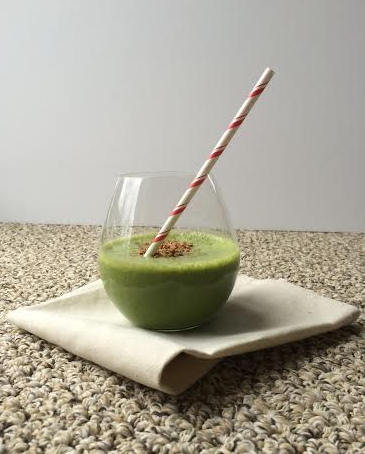
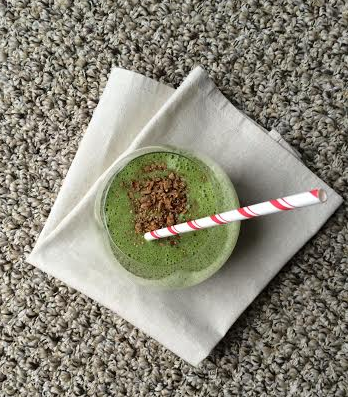
Happy Saint Patrick’s Day! Go green for Saint Patrick’s Day with my favorite green smoothie combination.
Some exiting things have been happening over in my little blog corner of the internet world. The other day I found out that I made the the 2015 Cabot Fit Team with 7 other fabulous bloggers! Whitney Bond of Little Leopard Book, Carrie Burrill of Bakeaholic Mama, Audra Fullerton of The Baker Chick, Julie Harrington of RDelicious Kitchen, Brianne Izzo of Cupcakes & Kale Chips, Kelly Mahoney of Kelly the Culinarian, Anne Mauney of FANNEtastic Food, and Kita Roberts of Pass the Sushi. Read more about each of these bloggers here!
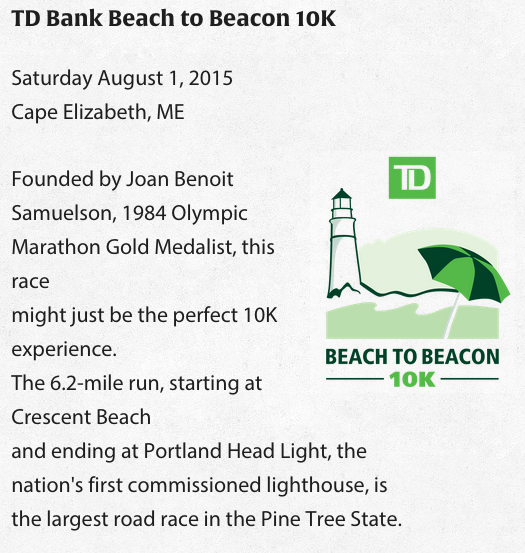
We will be running the TD Bank Beacon to Beacon 10k in Cape Elizabeth, Maine on August 1st. I can’t wait! I better start training soon!
You may be expecting a “shamrock shake” mint kind of smoothie on St. Patrick’s Day, but I’m sticking to my go-to green smoothie to share with you today.
Funny story, last year when I make a “lightened up” shamrock shake, my first attempt I added too much mint extract. Tasted like straight up toothpaste … gross. I’m not a huge mint fan, rather more of a peanut butter kind of girl, so this variation hits the spot! Plus, the secret it making it creamy is the little bit of Cabot Greek yogurt.
Happy National Registered Dietitian Day. As we wrap up this informational series of becoming a Registered Dietitian (Part One, Part Two) to celebrate National Nutrition Month, stay tuned the rest of the month for guest RD’s to share their stories.
It is a special day for Registered Dietitians. March 11th is National Registered Dietitian Day!!
As the nation’s food and nutrition experts, registered dietitian nutritionists are committed to improving the health of their patients and community. Registered Dietitian Nutritionist Day commemorates the dedication of RDNs as advocates for advancing the nutritional status of Americans and people around the world.
The title of this post should really be, “Life as a Registered Dietitian”. This is my first time celebrating this holiday and I am very excited.
The doors have really opened up for a career in dietetics over the years.
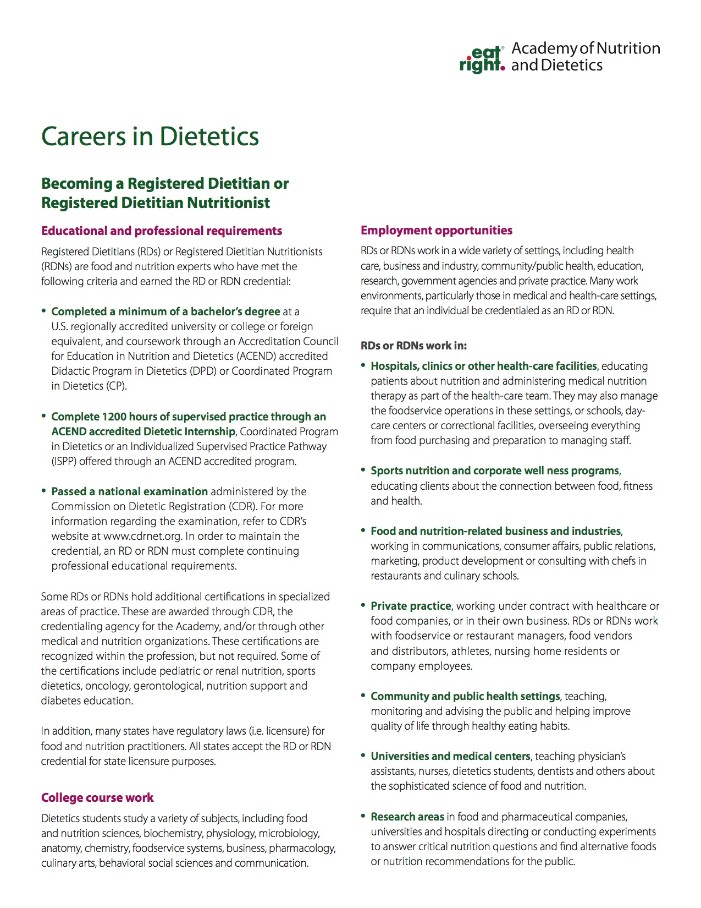
Employment opportunities RDs or RDNs work in a wide variety of settings, including health care, business and industry, community/public health, education, research, government agencies and private practice. Many work environments, particularly those in medical and health-care settings, require that an individual be credentialed as an RD or RDN.
RDs or RDNs work in:
Hospitals, clinics or other health-care facilities, educating patients about nutrition and administering medical nutrition therapy as part of the health-care team. They may also manage the foodservice operations in these settings, or schools, daycare centers or correctional facilities, overseeing everything from food purchasing and preparation to managing staff.
Sports nutrition and corporate well ness programs, educating clients about the connection between food, fitness and health.
Food and nutrition-related business and industries, working in communications, consumer affairs, public relations, marketing, product development or consulting with chefs in restaurants and culinary schools.
Private practice, working under contract with healthcare or food companies, or in their own business. RDs or RDNs work with foodservice or restaurant managers, food vendors and distributors, athletes, nursing home residents or company employees.
Community and public health settings, teaching, monitoring and advising the public and helping improve quality of life through healthy eating habits.
Universities and medical centers, teaching physician’s assistants, nurses, dietetics students, dentists and others about the sophisticated science of food and nutrition.
Research areas in food and pharmaceutical companies, universities and hospitals directing or conducting experiments to answer critical nutrition questions and find alternative foods or nutrition recommendations for the public.
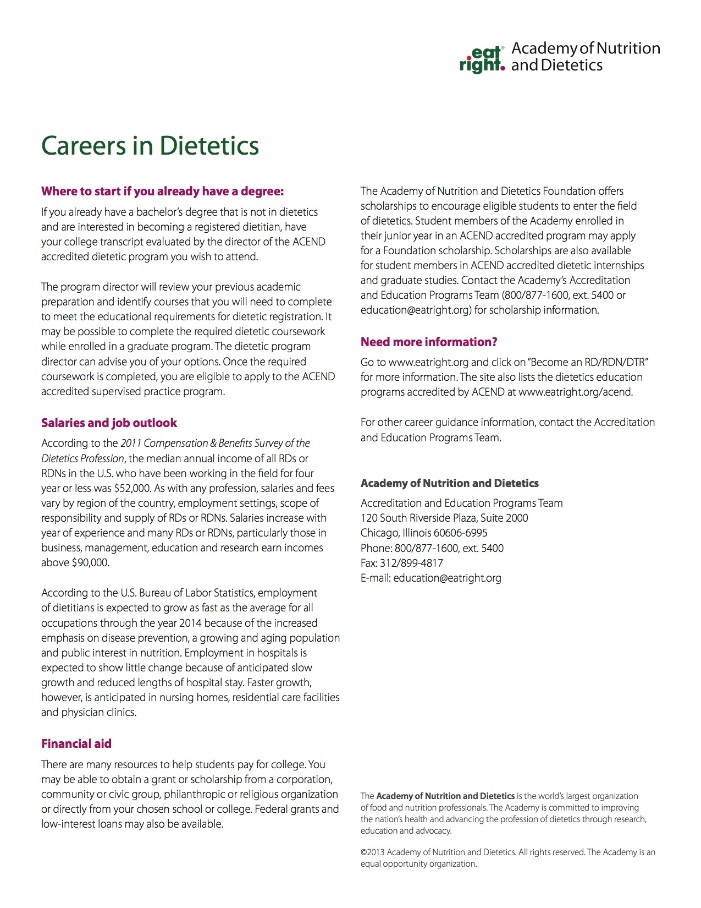
(source)
/ / / / / / / /
Throughout my dietetic internship I really grew professionally. It helped me find my niche in the dietetics world. Just like any field someone knows someone, so it is always good to network and make long lasting relationships. Meeting so many professionals in the field with new preceptors almost weekly opened so many doors and opportunities.
For myself personally, I knew the clinical environment was just not for me. While I liked the action in the hospital, I wasn’t able to utilize my culinary training like I would have liked to. I looked for other options when I was applying for my first job as a Registered Dietitian.
I am now using my Registered Dietitian certification and culinary degree in so many ways.
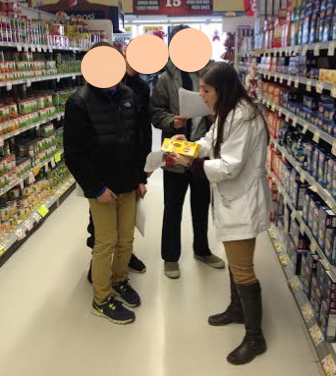
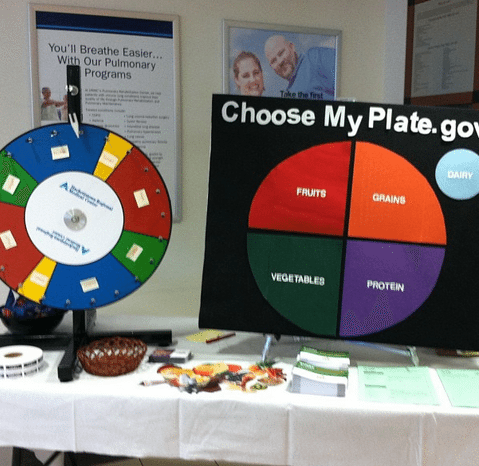
As you many know, if you are a consistent reader of RDelicious Kitchen, I am a Supermarket RD for a grocery chain in the northeast. This job is more than I could have even dreamed of. What’s a better place to provide nutrition education, than the place they shop for all of their food! As a Supermarket RD, I provide FREE nutrition services to the customers, employees, and the community – like nutrition education classes, seminars, presentations, consultations, grocery store tours, adult cooking classes, kids cooking classes, plus so much more! Every month I provide a calendar of events for customers to participate in. Customers and employees are able to sign up for individual appointments at any time and their is no limit to how many times they are allowed to come, which is amazing, because often times insurance may only cover 2-3 visits with a RD.
I really get to showcase my culinary training by teaching many cooking classes for adults and kids. It’s an awesome way to introduce new healthy foods to customers that they may not have seen before or too scared to try themselves. For example, one of my classes I recently used the whole grain teff, and not one person in my class had even heard about it before. Plus, I help customers learn new cooking techniques that they can utilize in their own kitchens. This is one of my favorite things to do at work.
Since I work in a grocery store full time, I like to share with my readers here what my latest “Supermarket RD Pick” is to introduce even more people to healthier choices found right in your grocery store.
Along with working as a Supermarket RD, I also work as a personal chef and recently started culinary nutrition consulting work on the side, and of course writing here at RDelicious Kitchen!
Connect with me on Linkedin!
Interested in becoming a Registered Dietitian or already on your way? Hope this mini series was helpful! Don’t hesitate to reach out if you have any questions: email – rdeliciouskitchen@gmail.com
Stay tuned for the rest of this month as some guest RD’s will be sharing their stories! Disclosure: I received permission by the Academy of Nutrition and Dietetics for use of NNM logo.
This post may contain affiliate links. Read my privacy policy.
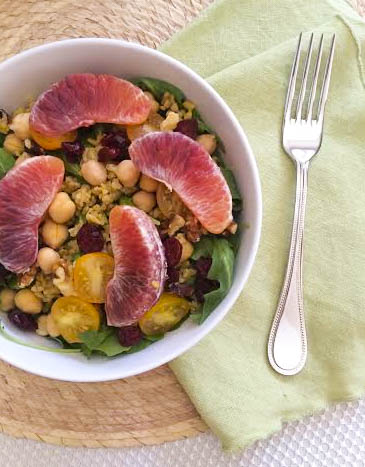
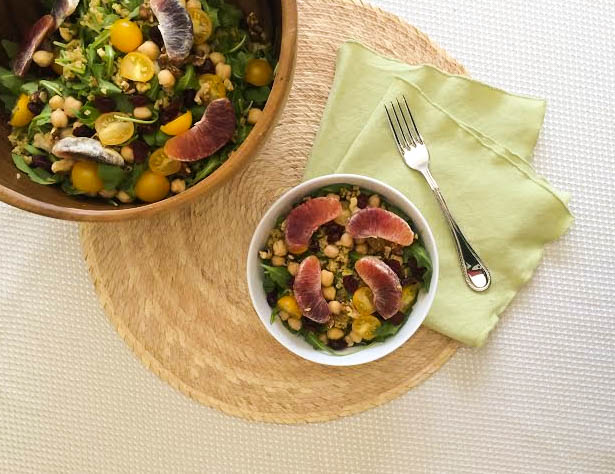
Tired of boring salads? Spruce up your salad with this Blood Orange & Freekeh Salad recipe.
Is anyone else as sick of the snow as much as I am? If you live in the northeast like me, you know what I mean..
Move over Winter, bring on Spring. My warm bowls of soup cravings have past and now my cravings have moved on to fresh colorful salads.
I typically always pack a salad for lunch. It’s a sure way I will meet my fruit/veggie quota for the day. Someone I work with noticed my salad routine and asked if I ever got bored of salad every day. Honestly, no! But it’s because I don’t pack a plain ole salad. The key is to pumping it up with various colors, textures, and flavors!
I always like to make sure I have a balance of protein, carbohydrates, fats, and plenty of fiber for the salad to keep me full through the afternoon.
Get adventurous! Find foods in your grocery store that you may not always pick up week to week. Blood oranges are fantastic and if you like navel oranges, you’ll definitely enjoy these too!
Becoming a Registered Dietitian: Part One covered Steps 1 & 2 of becoming a Registered Dietitian, about college courses and the dietetic internship you must complete in order to be eligible to take the RD Exam. In case you missed it, stop there first.
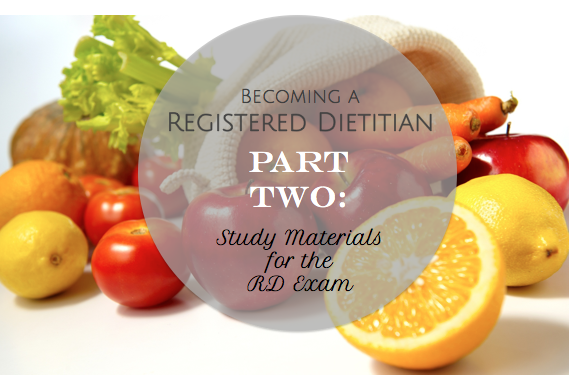
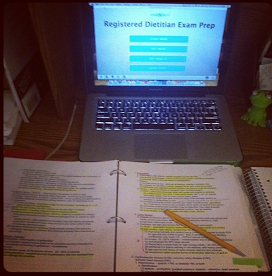
Today is all about Step 3 – Study materials to help prepare you to pass the RD exam. While completing the dietetic internship you learn so much, you really need to study to be fully prepared to take the RD exam.
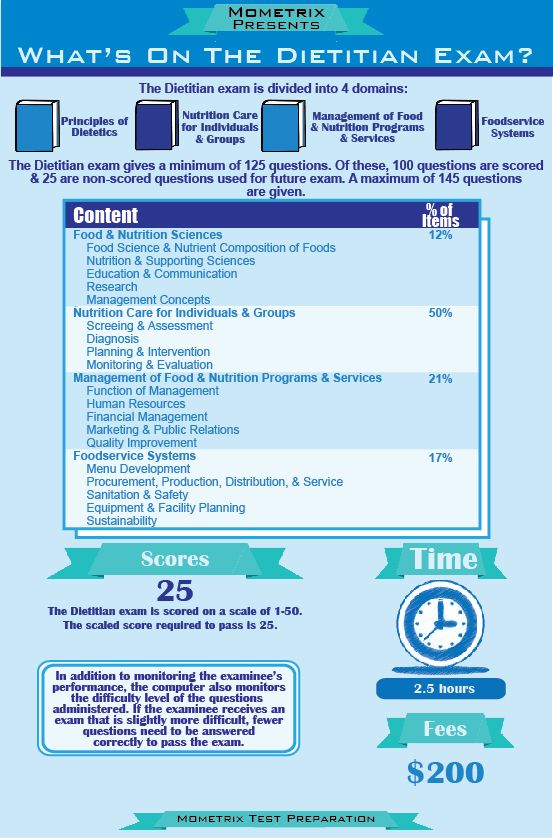
The exam is broken up into 4 domains: Food & Nutrition Sciences, Nutrition Care, Management of Food & Nutrition, and Foodservice Systems.
The exam is always taken at a test center that must follow the regulations of the exam. It is computerized and you are provided with a calculator and a mini white board to work out answers.
The questions are not in any specific order. The exam gives a minimum of 125 questions. Out of those 125 questions, 100 of them count toward the exam and 25 of them are testing for future RD exam questions. I personally, did not like knowing this. When I got to a particularly hard questions I second guessed if it was a real question or a question for future exam that wasn’t counting toward my exam.
Also, 125 exam questions is the minimum. You could get up to 145 exam questions. As you are taking the exam it is being monitored of the difficulty level. If the examinee receives more difficult questions throughout, fewer questions are needed to be answered correctly to pass the exam. Personally, I had all 145 questions.
The exam has a time limit set for 2.5 hours. You must answer each question to move on to the next one. The exam times out once the 2.5 hours are up.
The exam costs $200 dollars. If you happen to not pass the first time, you unfortunately have to wait 6 weeks to take the exam again.
Before you take the exam, you have to fully prepare yourself. There are various study materials out there to utilize. I want to share the ones I have used and other resources that are available.
Jean Inman’s Study Guide
You could go to her two day seminar to go through all the material in full detail, or you can purchase the materials to study at home. While it’s a little pricy at $385, I believe it was 100% worth it and I valued this guide the most and felt like it prepared me the best.
The study materials include:
• Detailed, comprehensive Study Manual following CDR study guidelines, covering all Domains. We do all the research, so your time is spent studying, not searching for information!
• All lectures on CD. Listen as you study the Manual. Because most of what is discussed is printed for you in the Manual, note-taking will be minimized. Your time can be spent learning.
• Over 1000 sample test questions.
• Tips on how to study and how to take the computerized test.
• Individual support provided by mail, phone or e-mail. If you have questions after you have studied a section.
The study materials are very in depth covering the nitty-gritty details that will appear on the exam. I would listen to the CDs in the car or on my iPod and go for a walk. [Side note: An embarrassing moment happened when I just put my iPod on shuffle before teaching a spin class. On the the tracks from the study guide came on and was talking about anthocyanins and the gym go-ers were a tad confused. lol] Visual Veggies
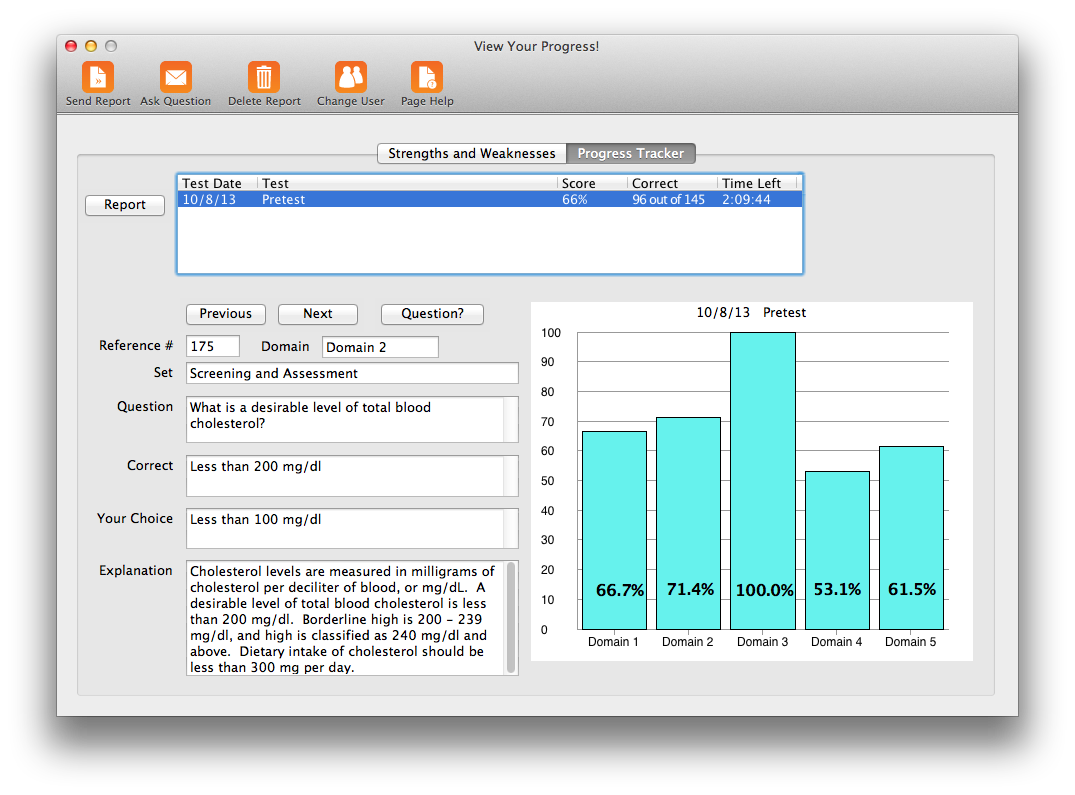
Get the experience you need to prepare yourself for the Registration Exam for Dietitians. The RD Practice Exam is a multiple-choice quiz application that closely resembles the actual RD Exam. The practice exams contain questions comparable to what is asked on the actual exam. All exam domains and their subcategories are included with many questions in each. The practice exams are timed tests to simulate the pressure of test-taking with limited time. Beyond the actual exam, the RD Practice Exam provides immediate feedback on whether the selected answer is correct or incorrect. Plus, a detailed description for each question explains more about the topic for a full learning experience.
I really loved Visual Veggies. It was great to have a structure like the how the RD exam would be – a timed series of questions. While Jean Inman’s practice questions had an answer key to the questions, I preferred Visual Veggies practice tests, because it had an explanation for each question you got incorrect.
What is also great, is that you can download the software to your computer, iPad, iPhone, or iPhone touch so you can easily study on the go!
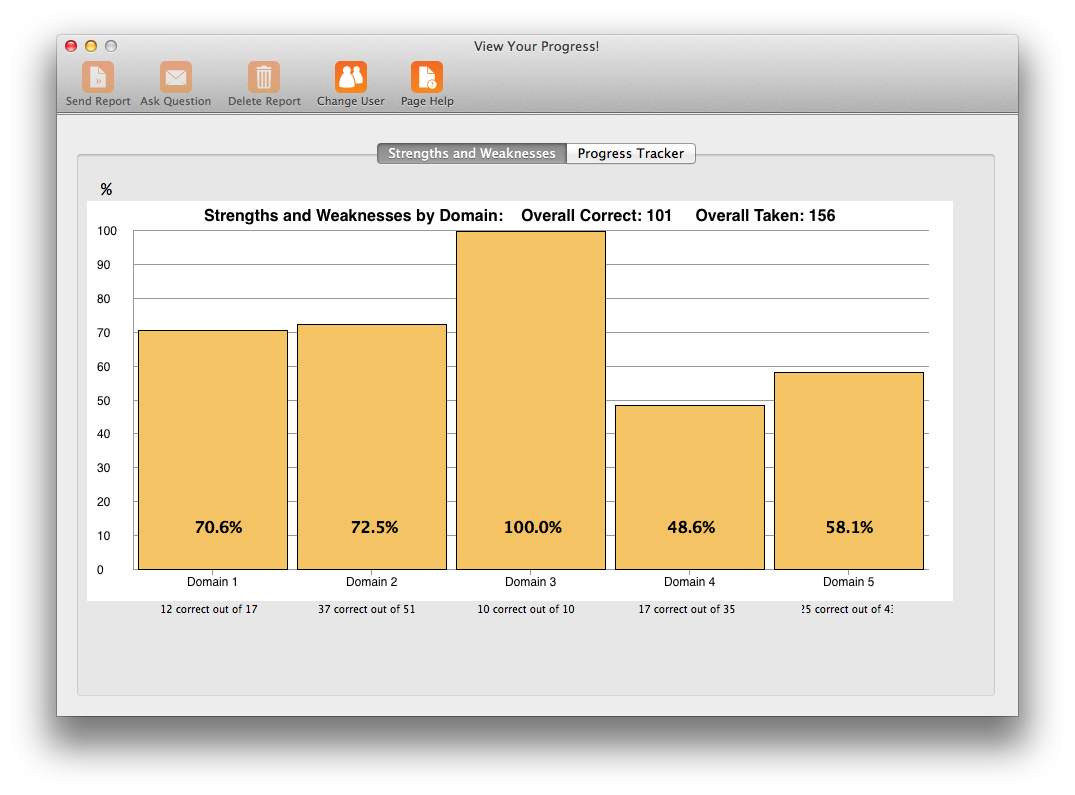
The practice exams also give you a breakdown of how you did with the questions from each domain. This was a big help to see which areas I was strong in and other areas that I was weak in and needed to study more. The software can take an average of all of your exams taken to give you an overall average in each domain as well. ** Other study materials my fellow RD friends have used: materials from EatRight.org, RDstudy.com, RD Exam Secrets Study Guide. I have not personally used any of these. If you have used any of these before, please share what you liked/didn’t like about these study materials.
/ / / / / / / /
Tips for studying and taking the exam:
1. Give yourself a timeline.
I scheduled my exam the second my paperwork went through for completing my dietetic internship. Knowing when I was taking the exam, I scheduled the days I would study and planned what domains I would cover each of those days. 2. Get out of the house.
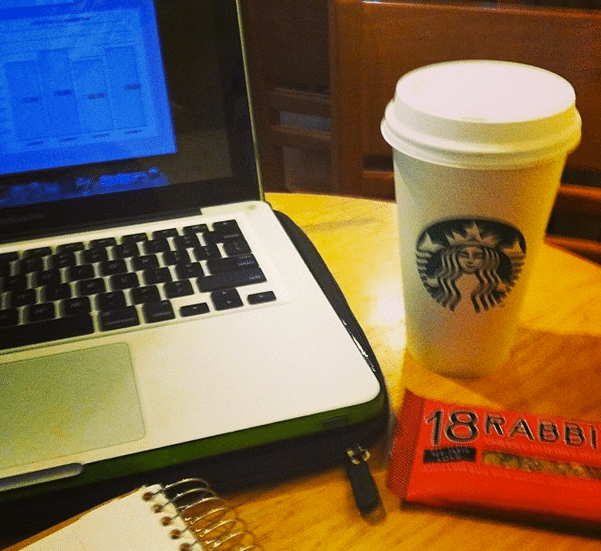
Studying at home, I would often get distracted. I became Starbucks best customers during those weeks of studying. I would be more focused when I was studying elsewhere. Plus, the perk was a a treat to a latte. 3. Practice!
Yes, you may have majority of the material memorized, but make sure you are able to apply the information to answer the exam questions. I personally felt the exam questions were great prep to apply the information studied. 4. Don’t overstudy.
Often times, overstudying can lead to second guessing the answers. Which brings to the next tip. 5. Be confident!
Be confident in your answers. What took me awhile to get used to, was that you had to answer the question to move forward to the next questions, and not able to go back to any questions. I would get super anxious about this, but remember you don’t have to get a perfect score. The questions I noticed I was taking a little too long on, I would try to eliminate as many wrong answers as I could and make an educated guess. 6. Celebrate!!!!
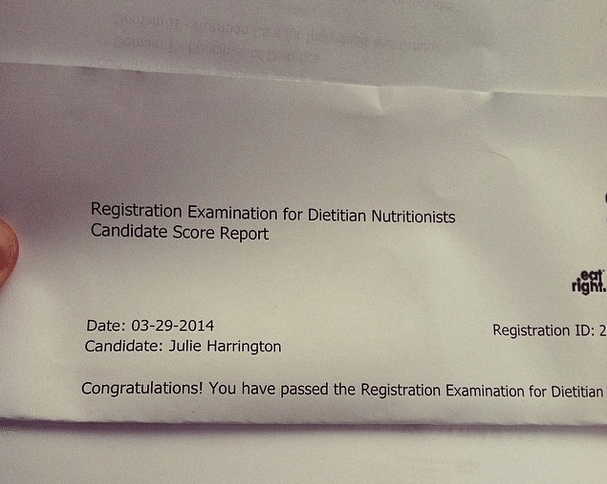
You just passed the RD exam. Congrats on becoming a Registered Dietitian. It is am amazing feeling after passing the exam. All the hard work feels like it has truly paid off! Disclosure: I received permission by the Academy of Nutrition and Dietetics for use of NNM logo. I was provided the Visual Veggies software for free. All thoughts and opinions are my own.
Join Julie at RDelicious Kitchen as she shares the steps in order to become a Registered Dietitian and her journey to becoming a RD.
Happy National Nutrition Month. In case you missed it, stop over to my blog post earlier this week to learn about what National Nutrition Month is and the difference between a Registered Dietitian and a Nutritionist.
So, how to you become a Registered Dietitian?
Every Registered Dietitian needs to complete the following in order to get those little RD credential letters after your name. [Step One] Complete a set of course accredited by the Academy of Nutrition & Dietetics (AND). [Step Two] Complete a dietetic internship, also accredited by the Academy of Nutrition & Dietetics. [Step Three] Study, study, study, and pass the RD exam! [Step Four] Continue to learn and keep up with the latest research with continuing education credits.
Today, we are going to learn a little more about steps 1 & 2. Step One: Complete a set of course approved by the Academy of Nutrition & Dietetics (AND).
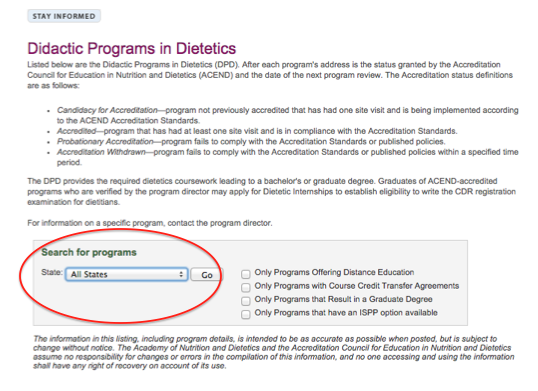
In order to move on to step two of completing a dietetic internship, you must complete at least a bachelor’s degree and ACEND-accredited coursework requirements (Didactic Program in Dietetics).
Now, where some colleges have nutrition courses, they may not be accredited by AND or cover the required materials to move on to completing a dietetic internship. Be sure to research schools before applying.
Find accredited nutrition programs here:
Step Two: Complete a dietetic internship, also accredited by the Academy of Nutrition & Dietetics.
After you complete all of the undergraduate course work, the next step is to apply to a dietetic internship, and get accepted!
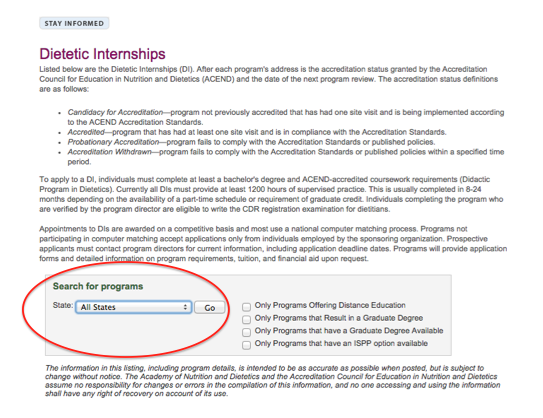
AND provides another portal for you to see the various internship programs here:
Dietetic Internship programs are very competitive, so it is important to keep your GPA up during undergraduate course work and be involved in various activities and volunteer experiences as much as possible.
There is a common application called DICAS (Dietetic Internship Central Application Services) to upload all of your prerequisite course, resume, volunteer experience, etc.
You are able to apply to as many programs as you choose, but then you are ranked according to your application and matched to one of the internships that you applied to. For a better understanding of the matching system click here.
Often schools will also hold interviews for the applicants they are interested in.
Currently all DIs must provide at least 1200 hours of supervised practice. This is usually completed in 8-24 months depending on the availability of a part-time schedule or requirement of graduate credit. Individuals completing the program who are verified by the program director are eligible to write the CDR registration examination for dietitians. Read in more detail of the coursework completed during a dietetic internship here.
/ / / / / / / /
“When you grow up, what do you want to be?” How many times were you asked that when you were younger. I don’t think many children really raise their hand and say Registered Dietitian, myself included.
I remember being a senior in high school with so many different ideas of what I wanted to do for a career. I just remember feeling so stressed with the feeling at 17 years old deciding what I wanted to do for the rest of my life.
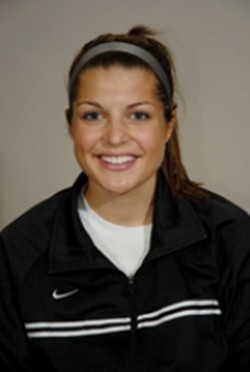
I actually started at Cabrini College with a major in Health Promotion. Honestly, part of my interest there was that I could play field hockey, but as I was attending Cabrini, I realized that this school and this major was not for me. I still wanted to be in the health field, but unsure where.
Cabrini Field Hockey team photo
Step One:
The next year, I transferred to Johnson & Wales University where I can say it was one of the best decisions of my life. For work, I recently spoke to a high school about going to culinary school and then how to become a Registered Dietitian after. I was reminiscing of all of the amazing classes and opportunities I had there that really made me grow in the profession as a Registered Dietitian.
Going to culinary school is not as the traditional route of undergraduate course studies that many nutrition students take in order to become a Registered Dietitian.
At Johnson & Wales you must complete an Associate’s Degree in Culinary Arts before going into the Bachelor’s Degree of Culinary Nutrition that contains the accredited DPD classes.
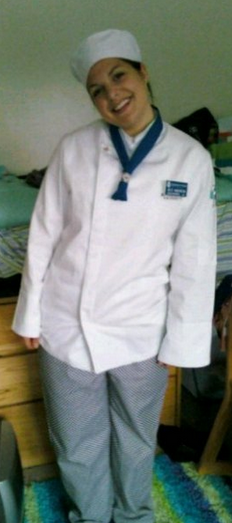
My first day at Johnson & Wales!
The Associate’s Degree in Culinary Arts really covered all the basics of cooking skills, techniques, various cuisines, and cooking methods with classes like:
Then you have to apply to the Bachelor’s Degree for Culinary Nutrition at Johnson & Wales where you continue to take culinary classes, but with a heavy nutrition focus and cover all the academic nutrition courses accredited by AND as well.
(^ that was actually one of my Chefs when I was attending JWU!)
Some of the Culinary Nutrition classes include:
These classes were so valuable. I use so much of the material I learned from JWU today. With a degree in Culinary Nutrition, it really opens up so many doors for different careers in nutrition.
After completing JWU, I actually didn’t go on right away into a dietetic internship program. During the application process during my senior year at JWU, I ended up needing surgery and took a full trimester off from classes. I then had to finish my courses during the that summer after graduation.
I feel like taking the year off before applying was actually a blessing in disguise. It gave me time to really research and figure out that I definitely wanted to take the next steps to become a Registered Dietitian. I worked to save money and really improved my resume with more volunteer hours and various experiences to strengthen my application. Without that extra oomph, would I have gotten in if I applied right out of JWU?.. We will never know! Step Two:
I was accepted to the College of Saint Elizabeth for my dietetic internship!
By completing my dietetic internship at the College of Saint Elizabeth, I completed 1200 + hours of supervised practice in many different areas including: food service management, medical surgical inpatient care, enteral/parenteral nutrition, developmental care, school food service, diabetes outpatient care, renal outpatient care, community nutrition, long term care, and corporate wellness.
The 3 dietetic coordinators at CSE were absolutely amazing. They all had different areas of specialties which I really felt like brought the whole program full circle in helping prepare the students for success.
With covering so many hours of the dietetic internship, I was able to experience so many setting of where a dietitian can work and what dietitians do in these various settings. I learned a SO much more than what a text book could ever provide. I am a much better learner hands-on and this is exactly what the dietetic internship is.
With being exposed to so many setting of what a dietitian can do, also helped me figure out what I wanted for my career as a Registered Dietitian. Personally, for me I knew clinical wasn’t the setting that I was looking for long term. As I found it rewarding, I just think being in hospitals myself for various reasons, I wasn’t particularly fond of the environment.
While the dietetic internship prepared me a lot .. there was still A LOT of studying needed to be done before taking the RD exam. So stay tuned! Coming up: Becoming a Registered Dietitian: Part Two – Study tools and materials for the RD exam Becoming a Registered Dietitian: Part Three – My experience as a Registered Dietitian
Disclosure: I received permission by the Academy of Nutrition and Dietetics for use of NNM logo.
Happy National Nutrition Month! Tune in all month for nutrition themed posts including: steps to becoming a RD, my personal journey to becoming a RD, featured RDs sharing their stories, plus nutritious recipes and more!
National Nutrition Month is a nutrition education and information campaign created annually in March by the Academy of Nutrition and Dietetics. The campaign focuses attention on the importance of making informed food choices and developing sound eating and physical activity habits. The theme for 2015 is “Bite into a Healthy Lifestyle,” which encourages everyone to adopt eating and physical activity plans that are focused on consuming fewer calories, making informed food choices and getting daily exercise in order to achieve and maintain a healthy weight, reduce the risk of chronic disease and promote overall health. (source)
This year celebrating National Nutrition month is a little extra special. This is the first National Nutrition month I am celebrating as a Registered Dietitian! Time flies when you are having fun.
This month I thought it would be a lot of fun to share my experiences of becoming a Registered Dietitian and feature other fellow RD’s as well.
Throughout my first year as a Registered Dietitian, I cannot even count the number of times I explained what the difference between a Registered Dietitian and a Nutritionist is.
The general populations is often confused about the difference between a “nutritionist” and a dietitian, but it is not accurate to use these terms interchangeably. Some registered dietitians (RDs) may refer to themselves as nutritionists, possibly to simplify things for someone less familiar with the term dietitian, but not all nutritionists are RDs.
The title nutritionist could be an array of different things. It is not a recognized credential and the definition can even vary from state to state. In certain cases, one may call themselves a nutritionist and may have some nutrition education and even obtained a bachelor’s degree in nutrition, but did not complete a dietetic internship and pass the RD exam. While others can still call themselves a nutritionist as well by taking a nutrition course without real pertinent education or training in the field of nutrition.
A Registered Dietitian has met specific academic requirements set forth by the Commission of Dietetic Registration (CDR) of the Academy of Nutrition and Dietetics (AND). The credential RD (registered dietitian) is nationally-recognized, legally protected, professional title and it can only be used by those who are authorized by the CDR.
Bottom Line: Registered Dietitians are the nutrition experts through their unique education and experiences with continuing education furthering their knowledge after passing the RD exam.
For the next couple of weeks, I will share my journey how I completed each step of becoming a Registered Dietitian. Stay tuned!
Want your story heard? E-mail rdeliciouskitchen@gmail.com to be included in this series!
I’ve mentioned time and time again here on RDelicious Kitchen about my love for chocolate. Hi my name is Julie, and I’m a chocoholic. I was overly excited for this months Recipe ReDux theme.
Favorite Chocolate Matches – Does your chocolate need a friend? This month’s posting will be after Valentine’s Day, so you may have a bit of extra chocolate around. What’s your favorite chocolate match? Be it traditional peanut butter or something more exotic like cayenne + chocolate. Show us your favorite healthy chocolate combo recipe.
You can’t go wrong with pairing chocolate with peanut butter. You can find me in the kitchen at night with a spoonful of peanut butter with chocolate chips on top. (Robin & Kylie do the same! Great minds think alike 🙂 )
Each month for for the recipe redux challenge, I make a list of recipe ideas and narrow it down, closer and closer to the due date. Yesterday, I was still figuring out what I was going to make. [#procrastination at it’s finest] I wanted to try and think outside the box, but it always came back to my favorite: chocolate + peanut butter.
I actually made a rendition of this recipe with just chocolate for a valentine’s day event at work, so I know it’s a crowd pleaser. The one thing that shocked people the most is one of the ingredients .. TOFU! It mades the mousse light and airy, plus packs in protein for a dessert recipe!
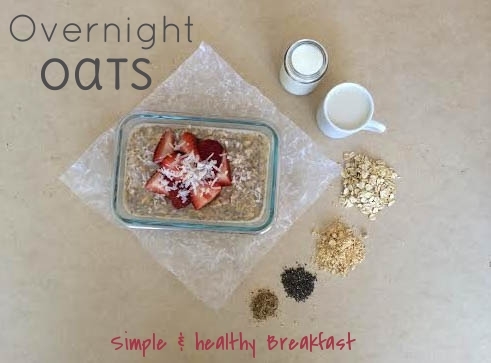
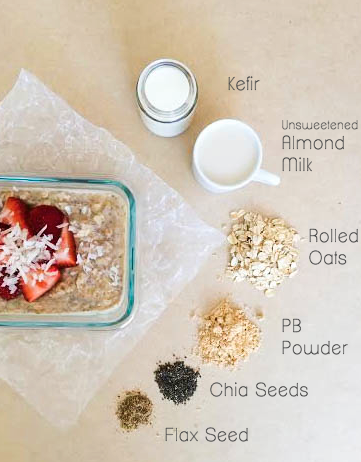
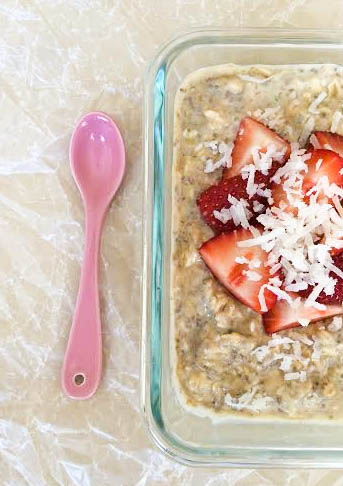
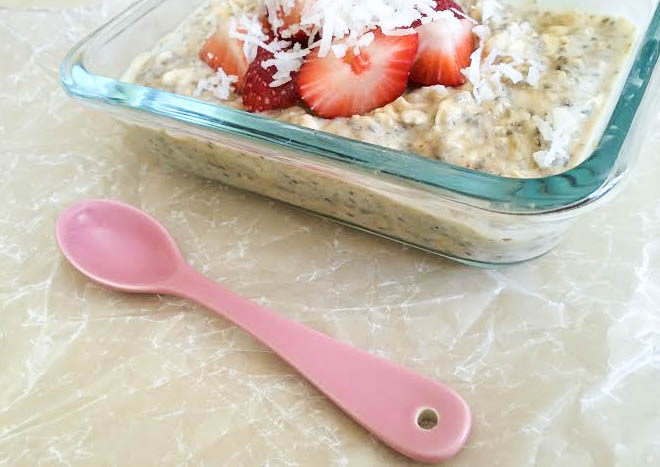
Not have enough time to make a wholesome breakfast every morning? Enjoy this overnight oats recipe that you can make the night before to help power you through your busy morning.
Oatmeal is one of those “stick-to-your-guns” kind of breakfast that I know will fuel me through the morning. Problem is, I don’t always have the time in the morning. I will savor that extra 10 minutes of sleep knowing I have breakfast ready to go waiting for me. I’ll even sacrifice doing my hair in the morning for extra sleep. Top buns for the win.
Half the time I am so rushed in the morning, I drink my coffee on the way to work and then eat my breakfast as I am returning emails and getting organized for my day. Skip those instant oatmeal packets. They are typically loaded with added sugar and even salt! This recipe is packed with ingredients you can feel good about. Filled with fiber & protein, it will keep you full all morning. Overnight, the oats absorb all the liquid and it becomes a thick cake batter consistency. You could always heat the oats up, but I enjoy them cold. Of course this recipe can be easily adapted with your favorite fix-ins. I always like adding a little extra fruit on top. And if I am feeling a little indulgent, I’ll stir in a little unsweetened cocoa powder for a chocolate peanut butter flavor!
Never have enough time in the morning to make breakfast? Make these overnight oats the night before for a wholesome breakfast you can enjoy in the morning.
This post may contain affiliate links. Read my privacy policy.
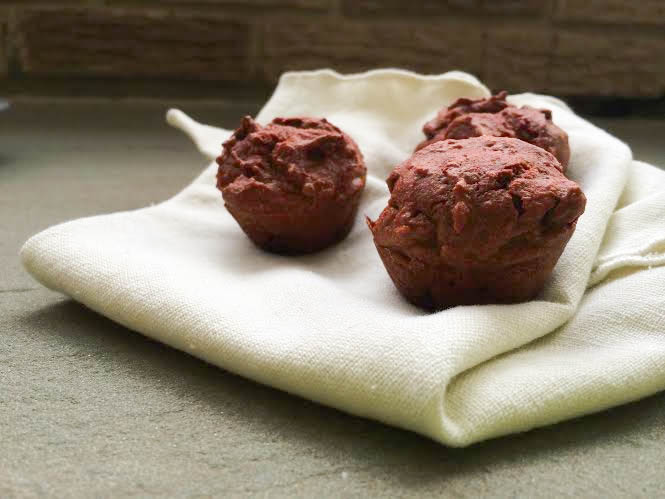
Skip the food coloring and dyes. These mini muffins are naturally pinkish/red with the help of sneaking beets into this muffin recipe.
In the beginning of the week I promised you I had a recipe to share using beets. With Valentine’s Day just around the corner, these mini muffins are perfect to make for your Valentine for breakfast.
Why is it that mini muffins just look so much cuter than regular muffins?
Many of the clients I work with don’t think muffins fit as part of a healthy breakfast. I 100% agree if it’s a giant bakery muffin filled with saturated fat, sugar, and refined flours.
These are perfectly portioned mini muffins with wholesome ingredients you can feel good about eating in the morning.
Whole grains (whole wheat flour & oat flour) .. check!
Vegetables (beets) .. check!
Healthy baking substitutions for fats with Greek yogurt .. check! The beets are key for this recipe because it helps retain moisture and their natural sweetness can help cut back on added sugar.
Plus, adding beets gives this recipe a boost in nutrition with potassium, magnesium, fiber, phosphorus, vitamins A, B, & C.
Skip the food coloring and dyes. This recipe is naturally pinkish with sneaking in beets
Ingredients
Scale
3 beets, cooked and peeled
1 cup oat flour
1/2 cup whole wheat flour
1/2 tsp baking soda
1 tsp baking powder
1/4 cup plain Greek yogurt
2/3 cup coconut sugar
1 tbsp vegetable oil
1 tsp vanilla extract
1 egg white
2/3 cup mini dark chocolate chips
Instructions
Preheat the oven to 350 degrees F. spray mini muffin tins with cooking spray and set aside.
In a food processor (or blender), blend the beets, yogurt, egg white, coconut sugar, vegetable oil, and vanilla until smooth.
In a large bowl, whisk together the oat flour, whole wheat flour, baking soda, and baking powder. Fold wet ingredients into dry ingredients, until just combined. Fold in the mini chocolate chips.
Spoon the muffin batter into the muffin tins, filling each 3/4 full.
Bake for 15-20 minutes, until a toothpick inserted into the center comes out clean.
Notes
To make this recipe easier, use Love Beets, already cooked and peeled!
This post may contain affiliate links. Read my privacy policy.
Family and friends will love this cheesy version of classic deviled eggs.
Growing up, I really never liked deviled eggs. I think because the traditional way is heavy with mayonnaise and I just absolutely do not like mayo. It is just one of those foods that gives me the heebie jeebies. I don’t mind that I dislike mayo, because as a dietitian, I always encourage others to cut back on condiments like mayo and to use other substitutes like yogurt instead.
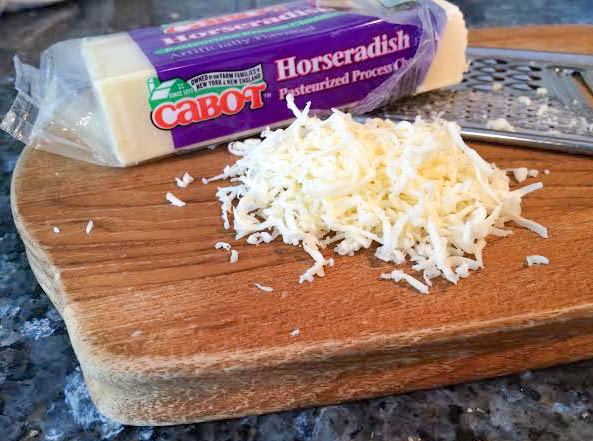
Don’t even get me started about cilantro. I think it tastes like soap. We can talk about that another day. Let’s get back to these deviled eggs. I wanted to make them cheesy, but also pop with flavor. That’s why I chose the horseradish variety for this recipe. Of course, you can always substitute with any kind of cheddar you would like. #cheddaisbetta
What’s that delicious crispy garish? Keep scrolling.. you won’t be sorry.
By posting this recipe I am entering a recipe challenge sponsored by Cabot Creamery and am eligible to win prizes associated with the contest. I was not compensated for my time.
Place 6 eggs in a pot and fill with cold water, covering the eggs by an inch. Bring the water to a boil, uncovered. Turn off the heat and cover the pot. As soon as the water comes to a boil, remove the pot from heat and cover. Leave the eggs in the covered pan for 10-12 minutes. Remove from water, Chill, and peel.
Cut each egg in half and scoop out the yolk into a bowl. Add the horseradish cheddar cheese, yogurt, dijon mustard, and chives. Mix well.
Stuff the egg whites with the yolk mixture. Garnish with chives, a sprinkle of paprika, and a cheesy chip.
Recipe Card powered by
Let’s talk about these cheesy crisps. It will change your life. Okay, maybe a little dramatic, but if you are a cheese lover you understand. 😉
Confession: I had to make extra cheesy crisps for the pictures because I may have snacked on the first batch a little too much.
This website uses cookies to improve your experience. We'll assume you're ok with this, but you can opt-out if you wish.AcceptRejectRead More
Privacy & Cookies Policy
Privacy Overview
This website uses cookies to improve your experience while you navigate through the website. Out of these, the cookies that are categorized as necessary are stored on your browser as they are essential for the working of basic functionalities of the website. We also use third-party cookies that help us analyze and understand how you use this website. These cookies will be stored in your browser only with your consent. You also have the option to opt-out of these cookies. But opting out of some of these cookies may affect your browsing experience.
Necessary cookies are absolutely essential for the website to function properly. This category only includes cookies that ensures basic functionalities and security features of the website. These cookies do not store any personal information.
Any cookies that may not be particularly necessary for the website to function and is used specifically to collect user personal data via analytics, ads, other embedded contents are termed as non-necessary cookies. It is mandatory to procure user consent prior to running these cookies on your website.





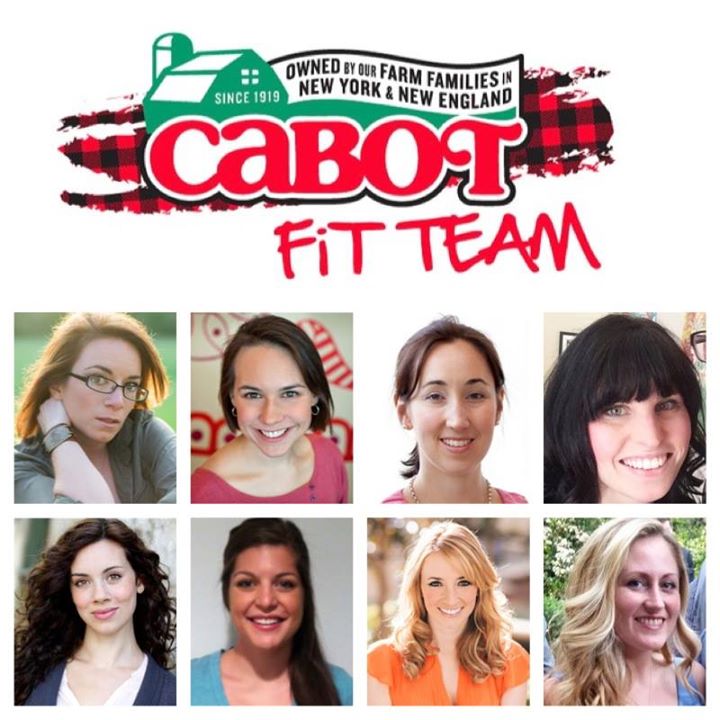 The other day I found out that I made the the 2015 Cabot Fit Team with 7 other fabulous bloggers! Whitney Bond of Little Leopard Book, Carrie Burrill of Bakeaholic Mama, Audra Fullerton of The Baker Chick, Julie Harrington of RDelicious Kitchen, Brianne Izzo of Cupcakes & Kale Chips, Kelly Mahoney of Kelly the Culinarian, Anne Mauney of FANNEtastic Food, and Kita Roberts of Pass the Sushi. Read more about each of these bloggers here!