Separate facts and fiction about farm-raised salmon and learn how the Norwegian aquaculture industry sets the standard for high-quality, safe, and sustainably farmed salmon.
This post is sponsored by the Norwegian Seafood Council. Thank you for supporting brands that make this blog possible!
I had an incredible opportunity last year to travel to Norway to learn first hand about seafood from Norway. As a dietitian and a chef, I am invested in learning about where our food comes from and the sustainability practices behind them to create a thriving future for the next generation.
Sustainability has been one of the main objectives of the Norwegian fishing industry, committed producing seafood in a safe, controlled, and sustainable manner with strict regulations.
Get the facts about farm-raised salmon from Norway
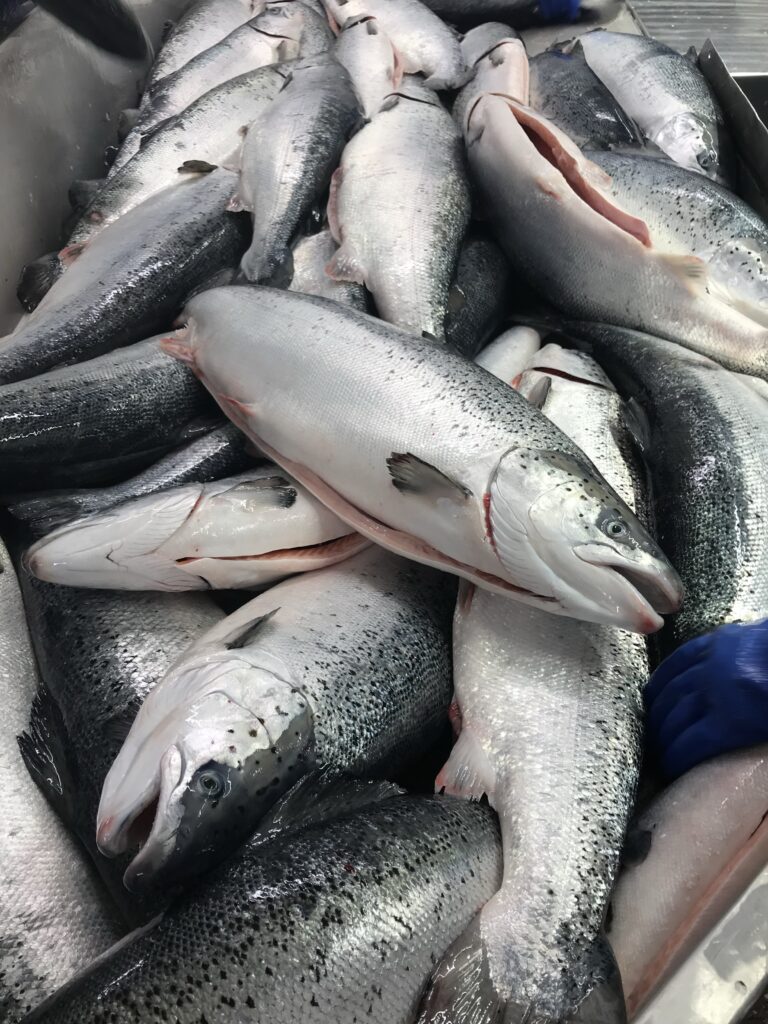
Farm-raised salmon from Norway is raised in its natural habitat and not a cramped pool of fish swimming on top of each other. The ratio of the pens in the fjord is 97.5% water to 2.5% salmon.
Farm-raised salmon from Norway is able to have much more control to prevent disease and mortality.
Seafood from Norway is all about sustainability. Since fishing had been part of their heritage for more than 2,000 years, taking care of the sea for the next generation is part of their culture.
Seafood from Norway is shipped fresh or frozen! (really, however, the customer wants it!)
Why origin matters
There are a lot of choices out there when it comes to seafood – both wild and farmed. Salmon is really one of the most popular species in the US and there are a number of species available with different characteristics.
The origin of the seafood, as every country has completely different practices.
How to identify seafood from Norway
According to the USDA, Country of Origin Labeling (COOL) is a consumer labeling law that requires retailers (grocery stores and supermarkets) to identify the country of origin on certain foods, including wild-caught fish, farm-raised fish, and shellfish.
It will clearly be listed that the seafood is from Norway or you can look for the Seafood From Norway seal.
Our group in Norway with safety gear to check out the Fjords.
Why eat more fish
Seafood helps build healthy hearts. Omega-3 fatty acids help reduce high blood pressure and high cholesterol levels, lowering the risk of heart disease.
Storing fresh salmon
Fresh salmon can last up to two days if stored close to 32 degrees, rather than up to one day at the typical home refrigerator temperature of 40 degrees. Place the fish in a zipper-lock bag on ice in a bowl (or cover it with ice packs) and place it at the back of the fridge, where it’s coldest.
How to freeze salmon
If you want to freeze raw salmon, pat it dry, and wrap it tightly in plastic wrap, place it in an airtight container and freeze it. Make sure to label it with the date and use it within three months.
Cooking Tips
Skin side up or skin side down?
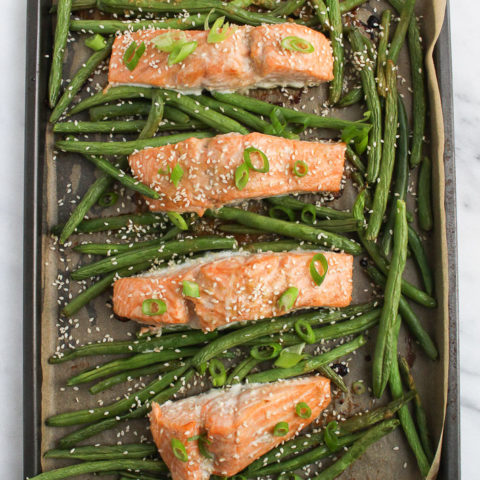
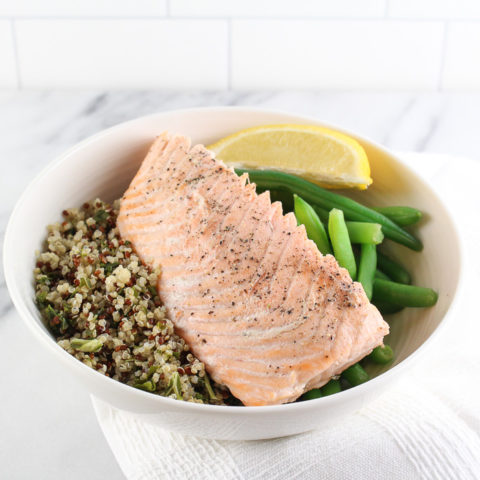
First of all—skin is tasty! So when you’re cooking salmon, keep that skin on. It provides a safety layer between your fish’s flesh and a hot pan or grill. Start with the skin-side down, and let it crisp up. It’s much easier to slide a fish spatula under the salmon’s skin than under its delicate flesh.
This post may contain affiliate links. Read my privacy policy.
This post is sponsored by The Beef Checkoff. Thanks for supporting brands that make this blog possible!
Dietitians are celebrating all month long because March is National Nutrition Month! This year’s theme is “Go Further with Food”. This theme encourages us to achieve the numerous benefits healthy eating habits offer while including a variety of healthful foods from all of the food groups on a regular basis.
Previously working as a Supermarket RD, I quickly learned that a grocery store is a confusing place, especially in certain areas like the meat section.
It can be challenging grocery shopping for beef if you are unsure of the difference between flank steak and skirt steak. The different costs, categories, or even proper cooking techniques of various cuts of beef can throw off even a savvy home cook.
At the supermarket meat case, each beef package label typically identifies the primal cut and the sub-primal cut name. It also includes the weight, price per pound, total price, sell-by date, and safe handling instructions. It may also include a grade, nutrition and preparation information, and the country of origin.
It’s time to “Beef Up Nutrition Month” with decoding what the labels mean in the supermarket meat case.
BEEF QUALITY GRADING
The USDA divides beef into categories by different grades. Prime, Choice, and Select are the ones you will see at the grocery store. The certain qualifications that determine the quality grade of beef are:
Distribution of marbling within the lean muscle at the 12th/13th rib
Age/maturity of the carcass
Color, texture, & firmness of the lean muscle
Prime-Grade Beef is the USDA’s highest designation. Coming from younger, well-fed cattle, this beef has more marbling with afirmer flesh. Prime-grade beef accounts for less than approximately five percent of the market in the United States, with the vast majority going to steakhouses and fancy hotels. Prime roasts and steaks are excellent for roasting, grilling, or broiling.
Choice-Grade Beef is of high quality and produced in highest quantity. Choice-grade beef has less marbling than Prime. This is the standard option at supermarkets. Choice roast and steaks, especially from the rib and loin, will be very tender, juicy, and flavorful when roasted, grilled, or broiled. Less tender cuts are great for slow cooking.
Select-Grade Beef is slightly leaner than Prime and Choice because it has less marbling. It can lack some tenderness, flavor, and juiciness as compared to the higher grades. Select grade beef often benefits from marinating prior to grilling or broiling. 1
Check out this easy to explore chart, outlining the various Grades of Beef.
NATURAL, GRASS-FED, ORGANIC – WHAT’S THE DIFFERENCE?
Beyond just the quality grade, beef comes along with additional labels. Package labeling can be very confusing.
All cattle spend the majority of their lives eating grass on pastures. But beef can be finished in a variety of ways, giving you choices when at the meat case in your local grocery store or at a restaurant.
“Natural” This label implies the beef has no artificial ingredients or colors added to it an is minimally processed. 2
“Naturally Raised” does have validity. As of 2009, the label ensures that the animals are free of antibiotics, never received growth-promoting hormones, never fed animal by-products, and may spend time at a feed yard. Naturally raised cattle may be either grain- or grass-finished.
“100% Organic Beef” means that the animals must be fed completely organic feed grains and have never received antibiotics and growth-promoting hormones. This is certified and inspected by the government. Organic beef cattle may be either grain- or grass-finished, as long as the USDA’s Agriculture Marketing Service certifies the feed is 100% organically grown and can be fed in a feed yard. 3
“Grass Finished” cattle spend their lives eating grass or foraging, but not always necessarily stay on a 100 percent grass-fed diet or finished on grass. Some “grass-fed” cattle are still fed grain for their last few weeks to help fatten the cattle. Grass-fed cattle may or may not be given FDA-approved antibiotics to treat, prevent, or control disease and/or growth-promoting hormones. 2
Need help choosing lean beef or wondering what type of cooking method works best? Use the Beef. It’s what’s for dinner’s cooking guide.
WHY BEEF?
Beef provides you with 10 essential nutrients that support a heart-healthy lifestyle including protein, zinc, iron and B vitamins. The nutrients found in beef provide our bodies with the strength to thrive and grow throughout all the stages of life.
Beef is an excellent source of protein.
One 3-ounce cooked serving of beef provides approximately 50% of your Daily Value (25 grams) of this important nutrient—making it an excellent source! Protein helps maintain a healthy weight, as well as preserve and build muscle.
New research suggests it’s not only important to just get enough protein in at dinner or lunch but to spread it throughout your day for optimal health. Aim for 25-30 grams of protein at each meal. 4,5
What is considered lean?
6 Look for the word “round” or “loin” in its name when choosing lean cuts of beef.
Lean cuts include top sirloin steak, tenderloin steak, strip steak (or top loin steak), or 95% lean ground beef.
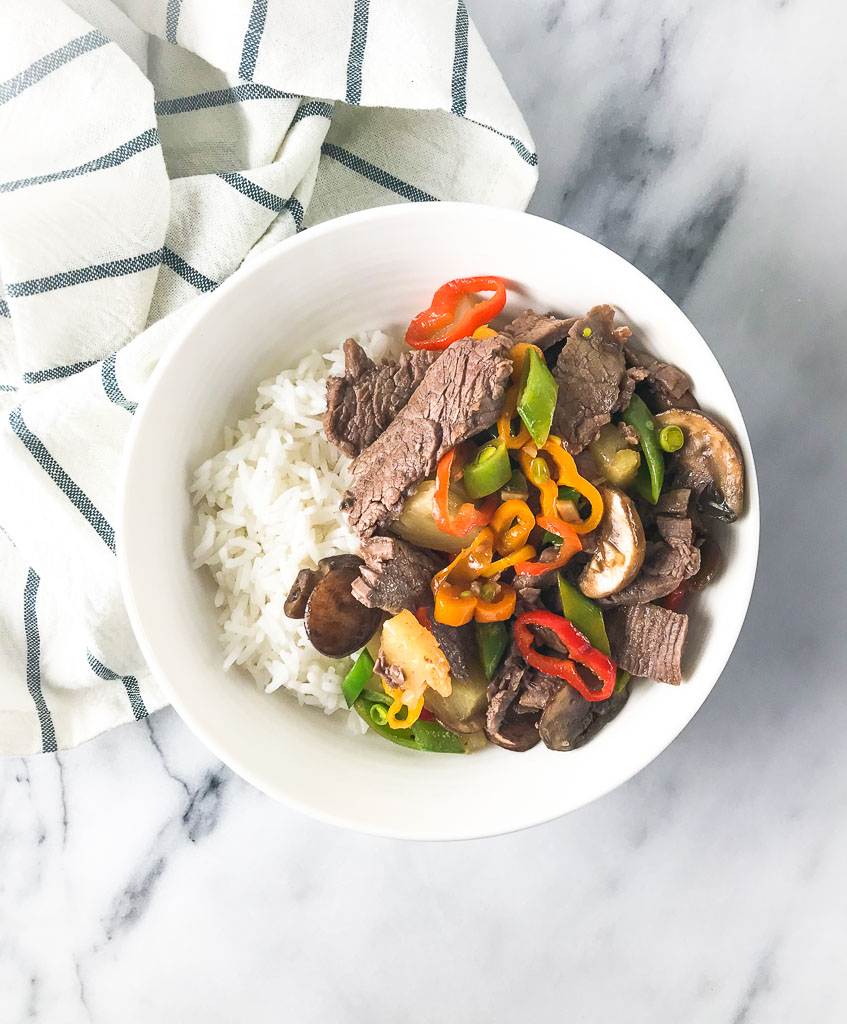
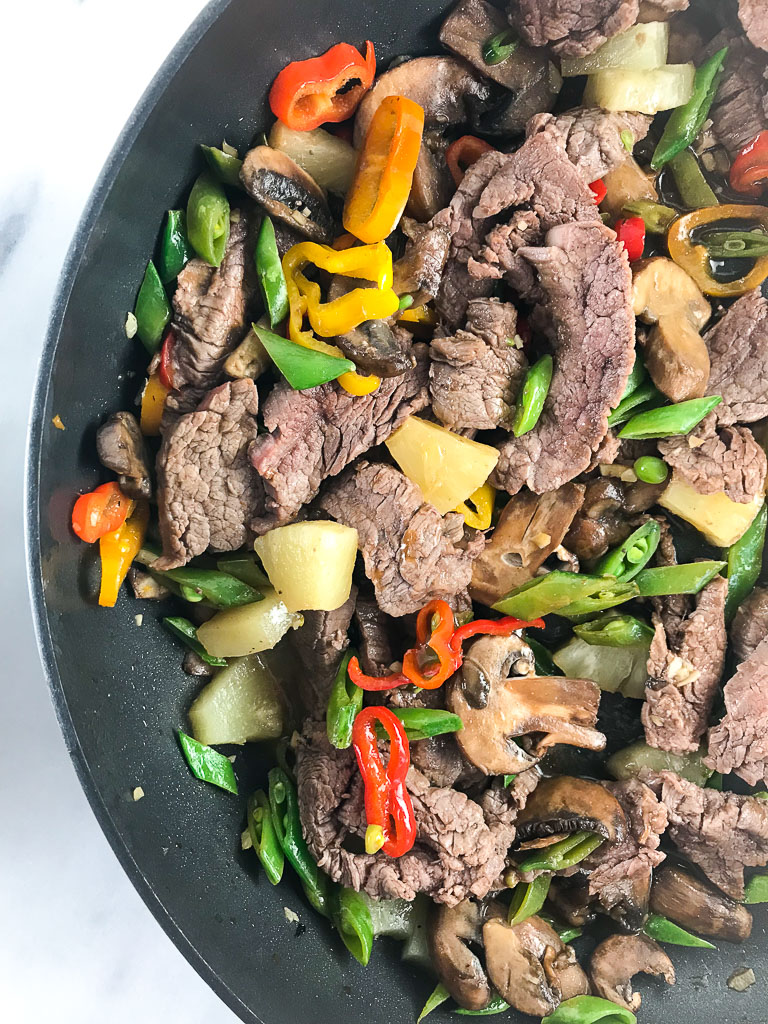
Whip up this simple and delicious stir-fry for dinner.
Ingredients
Scale
1 (8-ounce) can pineapple tidbits, 3 tablespoons juice reserved
5 tsp rice vinegar
1 tbsp low sodium soy sauce
1 tbsp ketchup
2 tsp brown sugar
1 lb. flank steak, cut into strips
1 tsp cornstarch
3 tsp sesame oil, divided
1 tbsp minced garlic
1 cup sliced mushrooms
1 cup snap peas
1 sweet pepper, sliced
Instructions
Whisk the reserved 3 tbsp pineapple juice, vinegar, soy sauce, ketchup, and sugar in a small bowl until smooth. Place beef in a medium bowl; toss with 2 tablespoons of the sauce. Let marinate for 20 minutes.
Add cornstarch to the remaining sauce and whisk until smooth.
Heat 2 teaspoons oil in a large nonstick pan over medium-high heat. Transfer the beef to the pan. Whisk any remaining marinade into the bowl of sauce. Cook the beef, stirring every 1 to 2 minutes, until tender, about 4-5 minutes. Transfer the beef to a plate.
Add the remaining 1 tsp oil to the pan and heat over medium heat. Add garlic, stirring constantly, until fragrant, about 30 seconds. Add the mushrooms, snap peas and sweet pepper to cook, stirring often, until just tender, about 3 minutes. Pour in the sauce and cook, stirring, until thickened, about 30 seconds. Add the beef and pineapple and cook, until heated through.
This website uses cookies to improve your experience. We'll assume you're ok with this, but you can opt-out if you wish.AcceptRejectRead More
Privacy & Cookies Policy
Privacy Overview
This website uses cookies to improve your experience while you navigate through the website. Out of these, the cookies that are categorized as necessary are stored on your browser as they are essential for the working of basic functionalities of the website. We also use third-party cookies that help us analyze and understand how you use this website. These cookies will be stored in your browser only with your consent. You also have the option to opt-out of these cookies. But opting out of some of these cookies may affect your browsing experience.
Necessary cookies are absolutely essential for the website to function properly. This category only includes cookies that ensures basic functionalities and security features of the website. These cookies do not store any personal information.
Any cookies that may not be particularly necessary for the website to function and is used specifically to collect user personal data via analytics, ads, other embedded contents are termed as non-necessary cookies. It is mandatory to procure user consent prior to running these cookies on your website.